R&D
Kapıotomat — Hands-Free Building Entry
In development
A Bluetooth system that opens the building door hands-free via phone, smartwatch or encrypted key fob; currently in development.
What it does
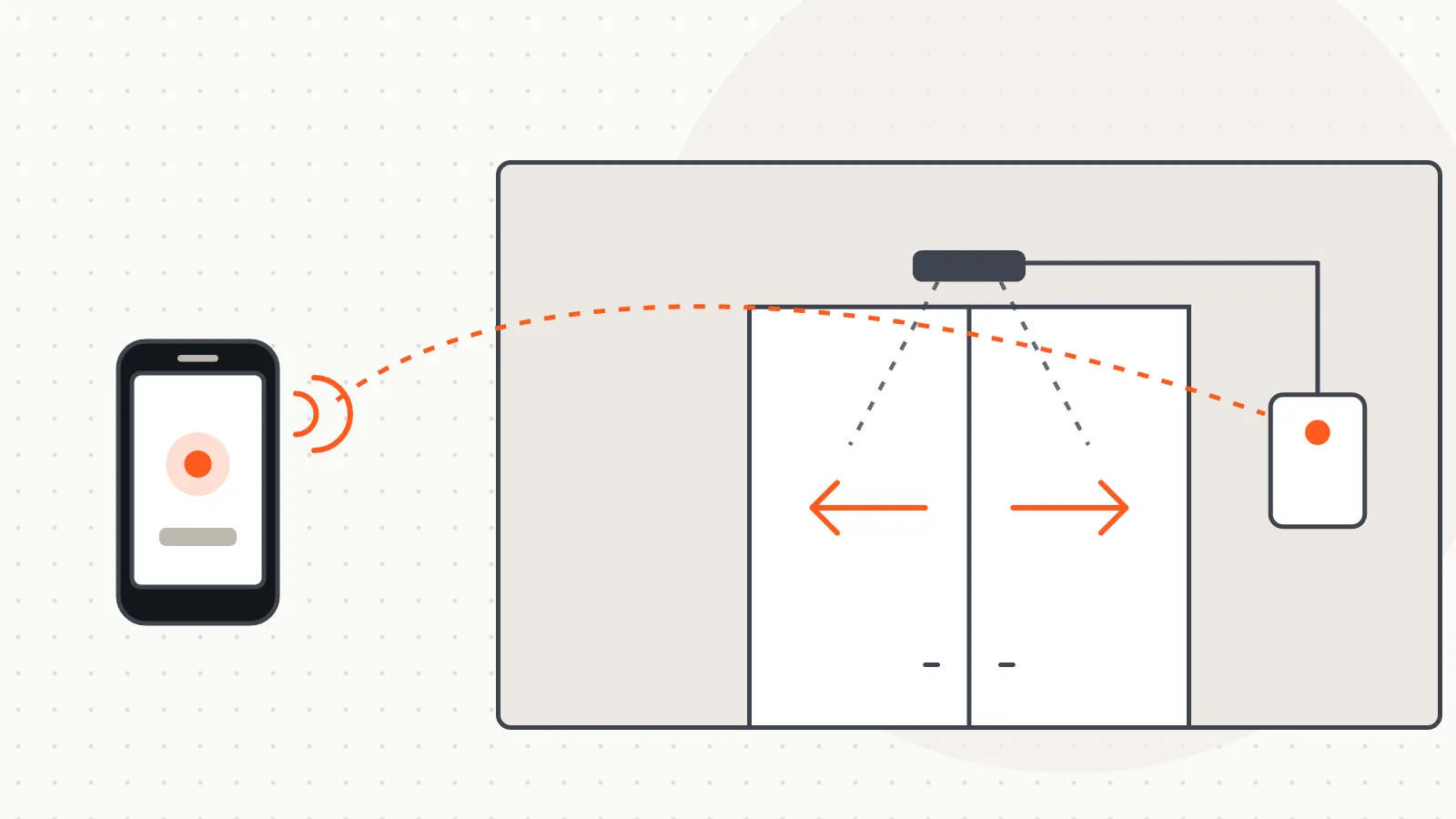
Kapıotomat is a Bluetooth (BLE) access system we are developing to open an apartment building's entrance door hands-free. The project is in development: the operating principles and hardware decisions are settled and first prototype trials are under way. This page describes a design in progress, not a finished product.
An authorised resident arriving with shopping bags or a pushchair should get in without searching for keys. The system recognises the person from the phone in their pocket, a smartwatch that can run the app, or an encrypted Bluetooth key fob, and releases the door lock; the person then pushes the door open.
Hands-free opening works on entry only. Exiting stays as it is today, with a push button or motion sensor. Visitors such as guests, couriers and cleaners continue to use the intercom.
How it works
The unit connects to the building's existing intercom door release. A relay wired in parallel with the intercom panel's "door open" output triggers the lock, which opens on the panel's own power just as when the intercom button is pressed. This keeps the system brand-independent, with no separate power supply.
Several conditions are evaluated together before the door opens:
- Approach: A strengthening signal from an authorised phone means the person is walking towards the door. Someone who has just left will not trigger it again for a few minutes.
- Presence detection (optional): On the radar model, the door opens when a person is detected in front of it.
- 10-second rule: Someone standing in front of the radar for more than 10 seconds is not treated as a new arrival, so the door stays closed. They need to step away and return, or open it manually from the app.
- Manual opening: The "Open door" button in the app only works within Bluetooth range; there is no remote opening.
Access is granted only to people registered by the building manager.
Security approach
Authentication between the phone and the unit uses an encrypted challenge-response exchange. The unit issues a different challenge every time, and the device answers it with a secret key unique to that person. This is designed to stop a response captured over the air from being reused for a later entry. When a person is removed in the panel, their access is revoked immediately.
No access system removes every risk; the design aim is to add convenience to today's key and intercom setup while keeping safeguards against unauthorised entry.
Technology
- Recognition: Bluetooth Low Energy. Android and iPhone are supported; on iPhone the user is asked for Bluetooth and "Location: Always" permission so the app can work in the background.
- App: A single Flutter code base; watch apps are developed separately. Watch support is limited to models that can install apps.
- Key fob: An encrypted Bluetooth key fob for people without a phone or with an unsupported watch.
- Connectivity: A SIM card provides NB-IoT / LTE-M cellular connectivity, independent of the building's Wi-Fi. Since the door opens locally over Bluetooth, the internet link only syncs the authorised user list and entry logs.
- Power: The unit runs from the intercom's 12V supply. During a power cut, entry is by key, as it is today.
- Model options: Two models are planned, with and without radar (mmWave).
Management panel
The building manager uses a cloud-based web panel to add and remove people, register and revoke key fobs, and view entry logs (who, which door, when and with which credential). The panel also shows whether the unit is online, when it last connected and its signal status.
The unit stores the authorised user list on board, so it keeps opening the door for registered people even when the internet is down.
Where it is used
The first target is the pedestrian entrance doors of apartment buildings and residential blocks. Vehicle gates and barriers are left for a later stage.
Development status
Kapıotomat is currently at the prototype stage. Initial trials use an Android phone, and prototype testing will also show whether a separate antenna or sensor part is needed outside the door. This page will be updated as the project progresses.
Images
 Open full-size image
Kapıotomat — Hands-Free Building Entry — demo screen