akilli sehir
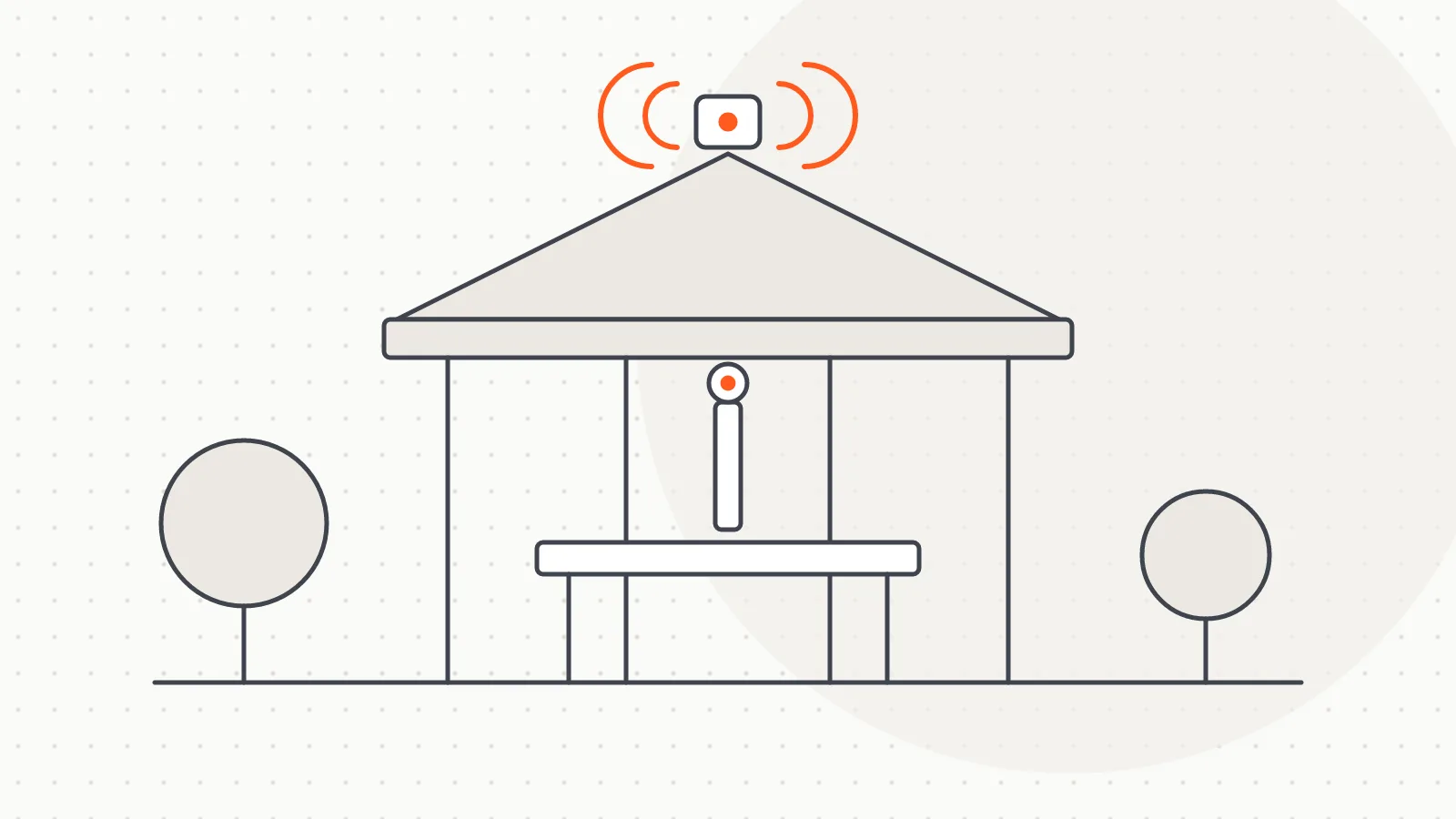
Smart Gazebo Reservation System
A system for booking picnic-area gazebos, with QR check-in and an LED occupancy light on each gazebo, linked over LoRaWAN.
akilli sehir
An adaptive junction system that sets signal timings by vehicle count, speed and queue length, carrying its data over LoRa.
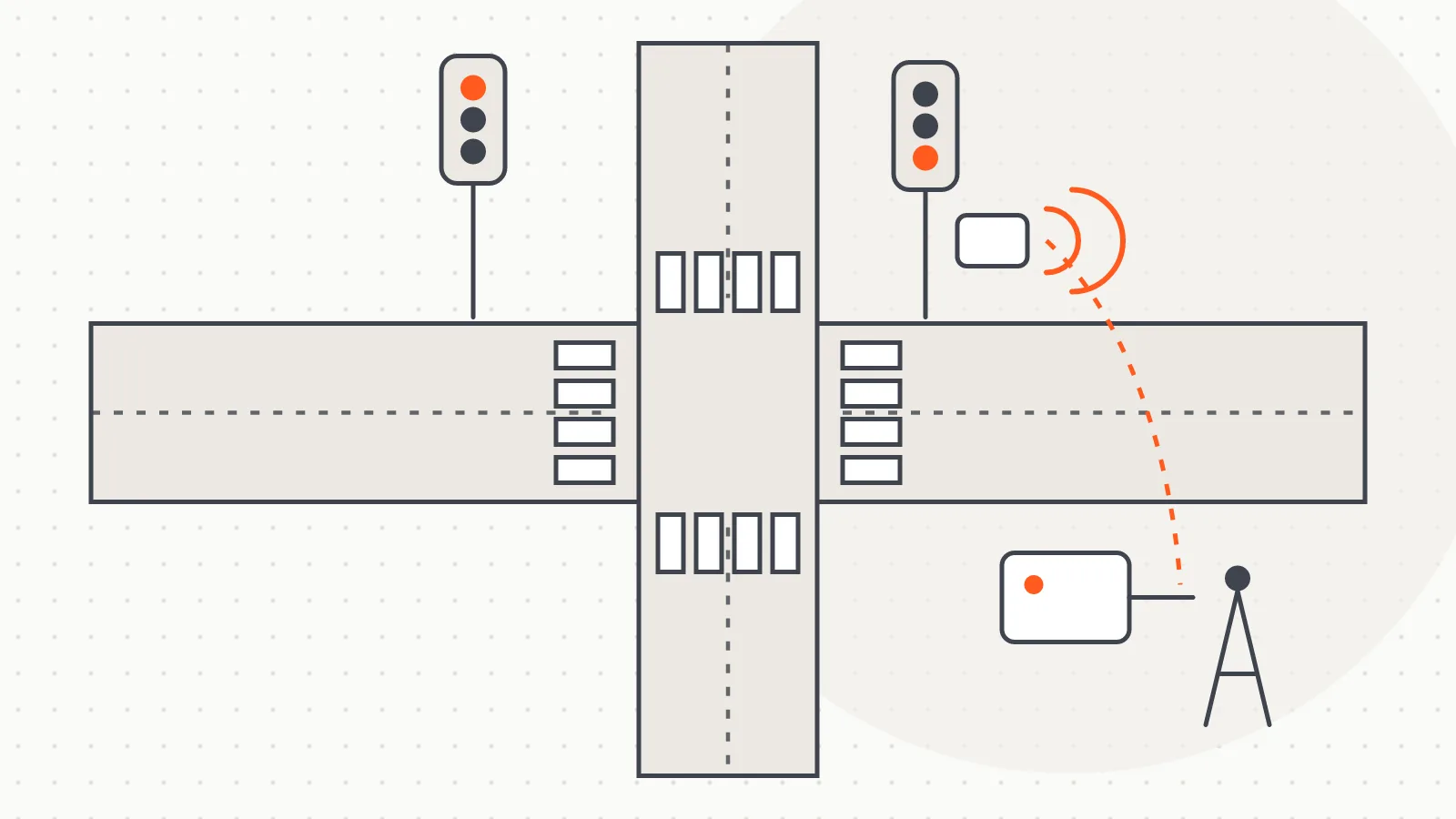
Smart Intersection is an adaptive signal control system that sets traffic light timings according to the traffic actually arriving at the junction, rather than a fixed schedule. Sensors on each approach measure vehicle count, average speed and queue build-up; the data travels over a LoRa radio link to a central unit, which redistributes green time so that busier directions get a larger share.
The system looks beyond simple counts. Because it also knows vehicle speed, slow or stopped traffic can be given higher priority than heavy but free-flowing traffic. Waiting pedestrians are treated as demand too, and a minimum crossing time is always preserved.
Emergency vehicles such as ambulances and fire engines receive full priority, while public transport receives conditional priority. As an emergency vehicle approaches, its direction is brought to green without skipping any safety intervals; for buses, the green phase is extended or brought forward. After the priority event, the approaches that were held back are rebalanced with compensating green time.
The system has three layers:
The control loop works on a scale of seconds: instead of reacting to every single vehicle, the system optimises phase durations over short windows. Instant safety functions, including amber time, all-red clearance and interlocking of conflicting greens, always remain in the signal controller's own firmware. A new plan takes effect at the end of a cycle, never mid-phase, and any plan that fails validation is rejected while the current one continues.
If the radio link drops, the junction keeps running. The signal controller falls back to the last valid plan stored in memory, or to a fixed-time backup plan. Radio is the optimisation layer of the system, not its safety layer.
Operating scenarios such as morning peak, night mode or event days are defined in a web panel and distributed to the devices with a version number. Even if the internet connection is lost, the junction continues with the last scenario it received.
The system is designed for adaptive signal management at single junctions, along arterial corridors and at multi-leg intersections. A four-way junction, a corridor of several junctions and a multi-leg intersection with a diagonal road were all modelled in simulation, including pedestrian phases and priority vehicle passage, and their behaviour was verified. Prototype hardware has since been built and tested; no field pilot has been carried out yet.
Installation on a real road requires compliance with traffic signal standards and approval from the relevant authorities. For that reason, work on a scale-model junction is planned before moving to the field, with sensor and traffic parameters to be calibrated during a future pilot installation.
akilli sehir
A system for booking picnic-area gazebos, with QR check-in and an LED occupancy light on each gazebo, linked over LoRaWAN.
Do you have a board, device or meter reading project? Tell us briefly what you need and our engineering team will get back to you.